
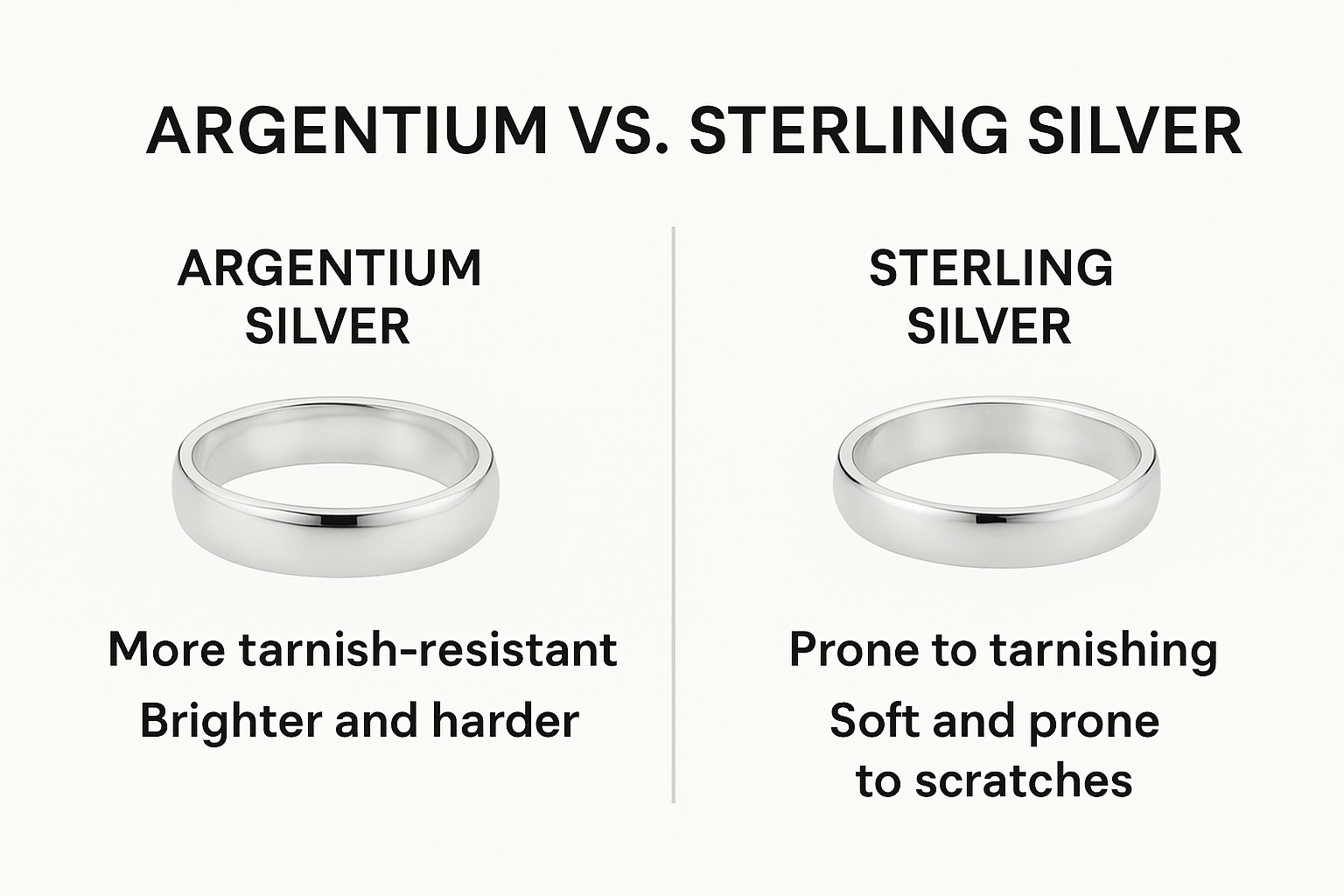
ARGENTIUM VS STERLING SILVER: KEY DIFFERENCES, PROS AND CONS EXPLAINED
Silver jewellery has always been a timeless favorite — elegant, versatile, and effortlessly luxurious. But not all silver is created equal. While sterling silver has long been the standard for quality jewellery, a newer alternative called Argentium silver is gaining popularity for its brilliance and tarnish-resistant properties.
If you’ve ever wondered how Argentium compares to traditional sterling silver, this guide breaks down everything — from composition to benefits, helping you make an informed choice.
What Is Sterling Silver?
Sterling silver, marked as 925 silver, is the most common type used in fine jewellery. It consists of 92.5% pure silver and 7.5% other metals, usually copper.
This alloy gives the metal durability and strength, making it perfect for everyday wear. However, one drawback of sterling silver is its tendency to tarnish over time, especially when exposed to air, moisture, or chemicals.
What Is Argentium Silver?
Argentium silver is a modern, high-quality version of sterling silver. While it also contains at least 92.5% pure silver, the key difference lies in the remaining percentage — Argentium replaces part (or all) of the copper with germanium, a rare element that enhances the metal’s properties.
This innovation makes Argentium silver brighter, stronger, and more tarnish-resistant than traditional sterling silver. It’s often marketed as a premium-grade silver for those who value low maintenance and modern craftsmanship.
Composition Comparison
| Type | Pure Silver (%) | Alloy Metal | Key Property |
|---|---|---|---|
| Sterling Silver (925) | 92.5% | Copper | Traditional, slightly tarnish-prone |
| Argentium Silver (930/960) | 93.0–96.0% | Germanium (and reduced copper) | Tarnish-resistant, brighter finish |
Advantages of Argentium Silver
-
Tarnish Resistance:
Argentium’s germanium content makes it significantly more resistant to oxidation, meaning your jewellery stays bright for much longer with minimal polishing. -
Brighter Finish:
Argentium has a whiter, more reflective surface than standard sterling silver — often compared to fine platinum or white gold. -
Hypoallergenic:
With less copper, Argentium is safer for sensitive skin, making it ideal for hypoallergenic jewellery. -
Eco-Friendly:
Most Argentium silver is made from recycled silver, making it a sustainable choice for environmentally conscious jewellery brands like Valentine Silver International. -
Stronger and More Durable:
Argentium is harder than traditional sterling silver, meaning it’s more resistant to scratches and dents.
Advantages of Sterling Silver
-
Classic and Widely Available:
Sterling silver has been the global standard for decades, making it easy to source and match with existing jewellery. -
Affordable:
It’s generally more cost-effective than Argentium silver, making it a popular choice for large-scale manufacturing and bulk jewellery sourcing. -
Timeless Appeal:
Many customers appreciate the traditional, slightly warmer tone of sterling silver. -
Trusted Craftsmanship:
Sterling silver’s consistency and reliability make it ideal for intricate designs, gemstone settings, and traditional styles.
Disadvantages of Each
| Type | Drawbacks |
|---|---|
| Sterling Silver | Prone to tarnishing, requires regular polishing, may cause mild skin irritation for some. |
| Argentium Silver | Higher cost, limited availability, requires specific temperature control during jewellery making. |
Which One Should You Choose?
It depends on your priorities.
-
Choose Sterling Silver if you prefer a more affordable, classic option with a traditional look and easy availability.
-
Choose Argentium Silver if you want a brighter, low-maintenance, and hypoallergenic metal that aligns with sustainable values.
For jewellery manufacturers and buyers, Argentium may appeal to premium markets, while sterling silver remains the go-to choice for timeless collections and wholesale production.
Valentine Silver International’s Expertise in Fine Silver Jewellery
At Valentine Silver International, we work with both traditional sterling silver and modern silver alloys, depending on the design, durability, and client requirements.
Our collections are crafted with precision, blending sustainability with style. Whether you’re sourcing classic sterling silver jewellery or exploring innovative materials like Argentium, VSI ensures every piece reflects quality, purity, and ethical craftsmanship.
Final Thoughts
Argentium and sterling silver both have their place in modern jewellery. Sterling silver offers tradition and affordability, while Argentium represents innovation and low-maintenance luxury.
The future of fine jewellery lies in balance — where craftsmanship meets conscious material choice. At Valentine Silver International, we continue to bridge that gap by creating silver jewellery that’s both timeless and forward-thinking.